Why Battery Recycling Is Critical — And Dangerous When Done Wrong
Batteries power our modern world, but they also represent one of the fastest-growing categories of hazardous waste. Lithium-ion batteries — found in phones, laptops, power tools, and electric vehicles — can spontaneously catch fire if punctured, crushed, or exposed to moisture. In 2024 alone, lithium battery fires caused over $1.2 billion in property damage across the United States.
Los Angeles County processes millions of batteries annually through certified recyclers like Greenly. Proper battery recycling Los Angeles prevents toxic electrolytes, heavy metals, and flammable compounds from entering landfills while recovering valuable materials like lithium, cobalt, nickel, and manganese for reuse in new batteries.
- One car battery contains 21 pounds of lead and 3 pounds of sulfuric acid
- Lithium-ion batteries can reach 1,000°F within seconds of thermal runaway
- Cobalt recovered from recycled batteries reduces mining demand by up to 70%
- California bans all batteries from household trash and recycling bins
Types of Batteries We Recycle in Los Angeles
Greenly Electronics Recycling accepts every major battery type used in consumer, commercial, and industrial applications. Each chemistry requires specialized handling and downstream processing. Here is what we take:
- Lithium-Ion (Li-ion): Found in smartphones, laptops, tablets, power tools, and electric vehicles. These require temperature-controlled storage, anti-static handling, and specialized smelting to recover lithium, cobalt, and graphite. We accept individual cells, battery packs, and EV modules.
- Lead-Acid (Car Batteries): The most recycled consumer product in America — 99% of car batteries are recovered. We accept automotive, marine, RV, motorcycle, and deep-cycle batteries. Lead is smelted and reused in new batteries; sulfuric acid is neutralized into sodium sulfate for fertilizer manufacturing.
- Nickel-Metal Hydride (NiMH): Common in hybrid vehicles (Toyota Prius), cordless phones, and early digital cameras. NiMH batteries contain nickel, cobalt, and rare earth elements that we recover through hydrometallurgical processing.
- Nickel-Cadmium (NiCd): Older rechargeable batteries found in power tools, emergency lighting, and medical equipment. Cadmium is extremely toxic and must be processed at EPA-licensed facilities. We ensure all NiCd batteries reach proper cadmium recovery plants.
- Alkaline & Zinc-Carbon: Standard household AA, AAA, C, D, and 9V batteries. While less hazardous than rechargeable types, they still contain zinc, manganese, and trace mercury in older models. We sort and process these through dedicated alkaline battery recyclers.
- Solar & Energy Storage Batteries: Residential and commercial battery backup systems including Tesla Powerwalls, LG Chem RESU units, and industrial rack-mounted lithium storage. These large-format batteries require forklift handling and specialized lithium recovery protocols.
How to Safely Store and Transport Batteries
Improper storage is the leading cause of battery fires during transport. Follow these guidelines to keep yourself and our team safe:
- Tape the terminals: Cover both positive and negative terminals with electrical tape or place each battery in a separate plastic bag. This prevents short circuits if batteries touch metal or each other.
- Do not puncture or crush: Never stack heavy objects on battery boxes. Punctured lithium-ion cells can enter thermal runaway within seconds.
- Keep away from heat and moisture: Store batteries in a cool, dry place. High temperatures accelerate chemical breakdown and increase fire risk.
- For damaged or swollen batteries: Place the battery in a fire-resistant container (like a metal bucket with sand) and transport it separately. Call us at (213) 600-1000 before bringing damaged lithium batteries so we can prepare our fire suppression protocols.
- For bulk commercial batteries: Use our palletized pickup service. We provide UN-certified hazmat packaging, labels, and documentation for large battery shipments.
What Happens to Recycled Batteries
After batteries arrive at our facility, they are sorted by chemistry type, state of charge, and physical condition. Damaged or swollen lithium batteries are quarantined in our fire-rated containment area for specialized handling.
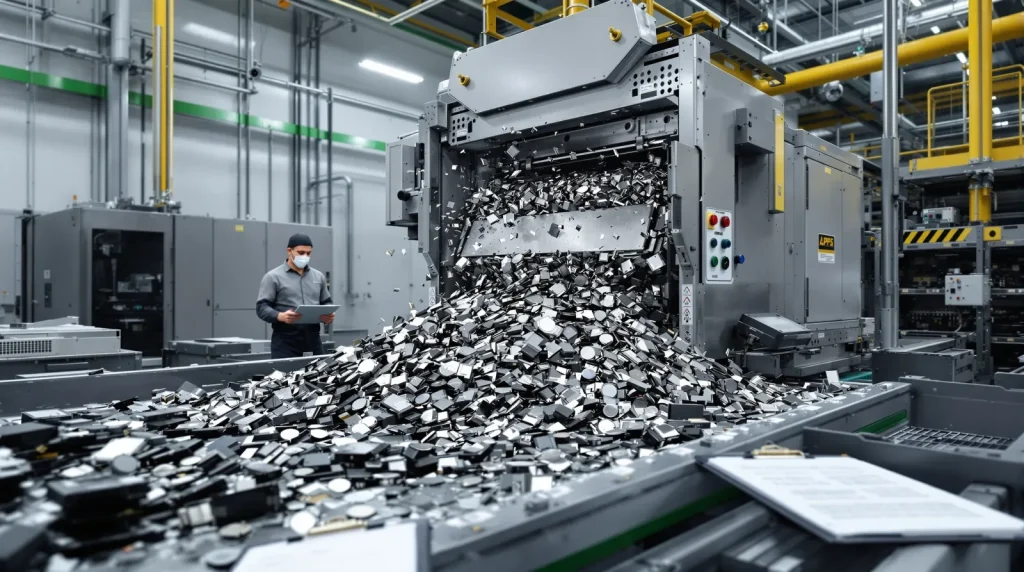
Lead-acid batteries are drained of electrolyte (the acid is neutralized on-site) and the lead plates are smelted. Lithium-ion batteries undergo a multi-stage recovery process: first discharged to safe levels, then mechanically shredded in an oxygen-free environment, and finally processed through hydrometallurgical refining to extract lithium carbonate, cobalt sulfate, and nickel sulfate. These recovered materials are sold back to battery manufacturers — closing the loop on battery production.
Frequently Asked Questions
Is battery recycling free in Los Angeles?
Yes. We accept most battery types for free residential drop-off at both Los Angeles locations. This includes lithium-ion batteries from phones and laptops, car batteries, NiMH hybrid batteries, and household alkaline batteries. Large-format solar and EV batteries may require a small processing fee depending on volume — call (213) 600-1000 for a quote.
Can a lithium battery start a fire in my car?
Yes, if the battery is damaged or the terminals touch metal. Always tape battery terminals and store batteries in a cool, dry place away from direct sunlight. Never leave loose lithium batteries in your glove compartment, center console, or trunk where they can shift and short-circuit against metal objects.
Do you recycle Tesla and EV car batteries?
Yes. We accept EV battery modules from Tesla, Nissan Leaf, Chevrolet Bolt, BMW i3, and other electric vehicles. EV batteries are large-format lithium-ion packs that require specialized handling, forklift transport, and dedicated recovery protocols. Contact us for EV battery pickup scheduling and packaging requirements.
How should I package batteries for drop-off?
Tape all terminals with electrical tape, place each battery in a separate plastic bag, and transport them in a sturdy box or container. For car batteries, keep them upright to prevent acid spillage. For damaged or swollen lithium batteries, place them in a metal container with sand and call ahead so we can prepare our fire safety protocols.
What happens to the lead from car batteries?
Lead from recycled car batteries is smelted and purified to 99.97% purity, then used to manufacture new car batteries. This closed-loop system is why lead-acid batteries are the most recycled consumer product in the world — nearly 100% of lead is recovered and reused indefinitely.